
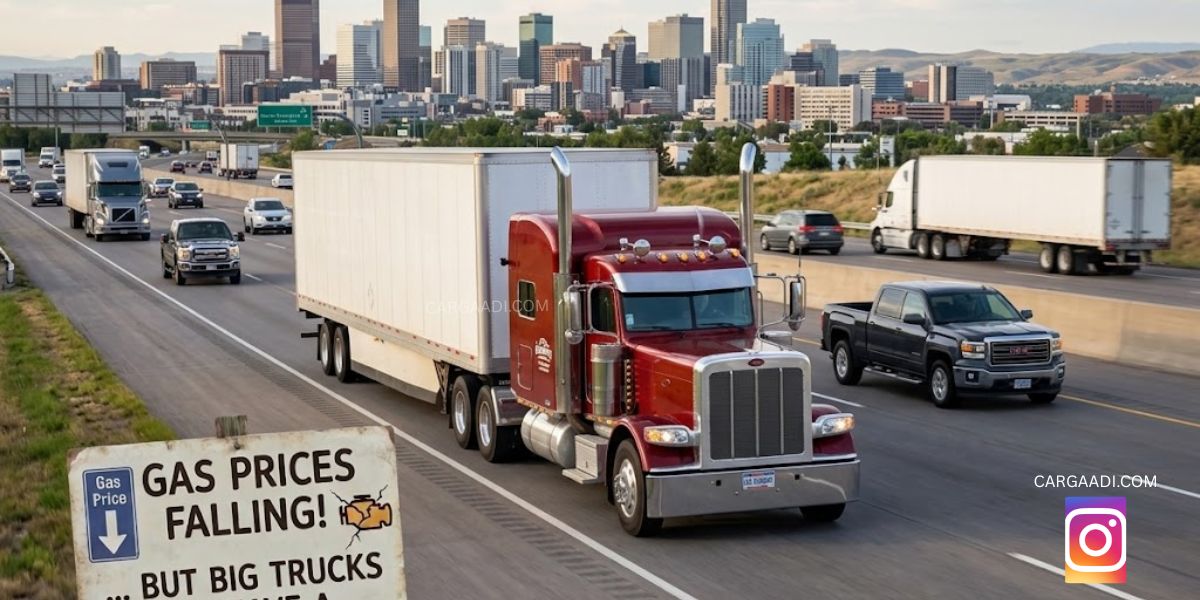
Lower fuel prices usually bring a familiar expectation.People drive more.
Large vehicles become easier to justify.
Truck sales improve.
But in 2026, America’s biggest trucks are running into a different reality.
Gasoline prices may be easing in parts of the market, yet full-size pickups and heavy-duty trucks still face pressure from rising ownership costs, changing buyer priorities, financing challenges, and increasingly expensive vehicle prices. Cheap fuel alone is not creating the demand surge many expected.
That is creating an uncomfortable question for the industry:
What happens when fuel becomes cheaper, but trucks still feel expensive?
Lower Fuel Prices Help – But Ownership Costs Changed
For years, fuel prices played a huge role in truck buying decisions.
When fuel became expensive, buyers moved toward smaller vehicles.
When fuel became cheaper, trucks gained momentum.
That relationship still exists.
But today’s truck market looks very different.
Modern full-size pickups have become larger, more advanced, and significantly more expensive than previous generations.
Many premium truck trims now compete with luxury SUVs on price.
As a result, monthly payments, insurance, financing rates, and long-term ownership costs increasingly matter more than fuel alone.
Truck Prices Climbed Faster Than Many Buyers Expected
America’s truck market evolved beyond basic work vehicles.
Today’s buyers expect:
- Large digital displays
- Advanced driver assistance
- Premium interiors
- Higher towing capability
- More technology integration
Those upgrades improved the experience.
They also raised the entry price.
For many buyers, saving money at the pump no longer offsets a larger monthly payment.
That changes how people shop.
EV Trucks Added Another Layer Of Complexity
At the same time, manufacturers invested heavily in electric trucks expecting rapid adoption.
The transition has not been as smooth as many originally projected.
Several automakers, including GM, adjusted EV production plans and scaled output to better match market conditions. Factory ZERO in Detroit temporarily reduced activity, and workforce changes followed broader efforts to improve efficiency and align production with demand.
That does not mean electric trucks are disappearing.
It means the market is developing differently than early expectations.
Why Big Trucks Still Matter
Even with changing economics, large trucks remain incredibly important in America.
They continue dominating for reasons that go beyond fuel:
What Keeps Demand Strong
| Factor | Why Buyers Still Choose Trucks |
|---|---|
| Utility | Work and towing capability |
| Space | Large cabins and cargo flexibility |
| Resale Value | Strong long-term appeal |
| Comfort | SUV-like interiors |
| Lifestyle | Multi-purpose ownership |
Manufacturers know this.
That is one reason truck programs remain central to profitability.
The Industry May Be Moving Toward Balance Instead Of Extremes
The next phase of the market may not belong entirely to gasoline or fully electric trucks.
Instead, automakers appear increasingly interested in flexibility:
- More efficient combustion engines
- Hybrid systems
- Selective EV expansion
- Better manufacturing efficiency
- Regional demand adaptation
GM has repeatedly stated that electrification remains part of its long-term strategy even while adjusting production plans to reflect real market demand.
The Real Truck Problem Is Bigger Than Fuel
Fuel prices changing is easy to notice.
Ownership economics changing is harder to see.
That may explain why falling gas prices have not automatically created a truck buying boom.
People are thinking about total cost more than ever.
And trucks—despite remaining incredibly desirable—have become expensive machines to buy, insure, and finance.
Conclusion
America’s big trucks are not in trouble.
But they are facing a new kind of challenge.
Cheaper fuel still helps.
It just no longer solves everything.
In today’s market, buyers are weighing payments, technology, long-term value, and flexibility just as heavily as what happens at the gas station.
And that may permanently change how trucks are built—and sold.
Disclaimer
This article is based on publicly available reports, market observations, and manufacturer commentary available at the time of writing. Fuel trends, production decisions, demand conditions, and vehicle pricing may continue to change across regions and segments.