
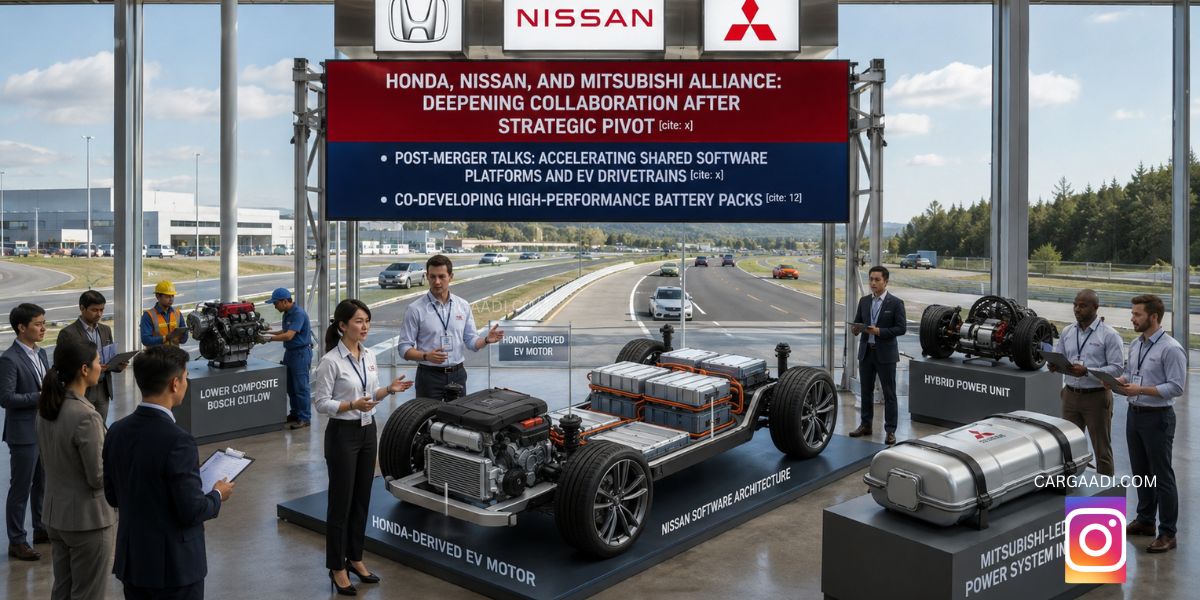
After highly publicized merger discussions collapsed, many people assumed the relationship between the three Japanese automakers would disappear. Instead, the opposite seems to be happening. The companies are continuing to work together through a strategic technology partnership focused on sharing development efforts and reducing costs in areas that matter most for the future of the industry.
The message feels clear: no merger does not mean no cooperation.
The Merger Failed, But The Bigger Goal Did Not
The original discussions had the potential to create one of the world’s largest automotive groups.
However, the talks eventually broke down after disagreements over structure and governance, including proposals that would have changed the balance of control between the companies. Reports indicated that concerns around autonomy and decision-making became major obstacles.
Even though integration plans ended, all three companies decided not to abandon the parts of the relationship that still made sense.
That decision may prove more important than the merger itself.
Expected Areas of Collaboration
| Category | Cooperation Focus |
|---|---|
| Vehicle Technology | Shared Development |
| Electrification | Joint EV Strategy |
| Smart Mobility | Connected Vehicle Systems |
| Components | Standardized Parts |
| Manufacturing Efficiency | Cost Reduction |
| Software | Future Platform Collaboration |
| Long-Term Goal | Faster Product Development |
Future collaboration details may evolve as official announcements continue.
H2: Why The Three Companies Still Need Each Other
H3: Building Cars Has Become More Expensive Than Ever
Modern vehicles are no longer just mechanical products.
Automakers now invest billions into batteries, software, connected services, autonomous technologies, and new manufacturing systems.
That creates enormous pressure—even for major global brands.
According to recent reporting, Honda, Nissan, and Mitsubishi continue working together to standardize selected components and share development costs instead of duplicating investment across all three companies.
That approach could allow each brand to keep its identity while benefiting from larger-scale engineering.
H2: This Is Not A Merger 2.0
H3: Independence Still Matters
One important detail often gets lost.
The companies are not returning to merger discussions.
Instead, the relationship appears focused on strategic cooperation.
That means customers should not expect identical vehicles wearing different badges.
Each company still wants to maintain its own product identity and market positioning while collaborating behind the scenes where it improves efficiency.
H4: Honda Brings Scale
Honda remains one of Japan’s strongest and most diversified automakers.
H4: Nissan Brings Experience
Nissan continues investing heavily in electrification and restructuring.
H4: Mitsubishi Adds Flexibility
Mitsubishi’s strengths in specific vehicle categories and partnerships remain valuable.
H2: What This Means For Future Cars
For buyers, the biggest changes may not even be visible.
Shared technology could lead to:
- Faster EV development
- Better software integration
- Lower engineering costs
- More efficient vehicle platforms
The goal appears to be creating stronger products without requiring a full corporate merger.
H2: Final Thoughts
The collapse of the merger talks looked dramatic at the time.
But stepping back, the outcome may reveal something bigger about the modern auto industry.
Companies no longer need to fully combine to work together.
Honda, Nissan, and Mitsubishi seem to believe cooperation without losing independence may deliver many of the same advantages—with fewer complications.
And in an industry changing this quickly, that strategy may make more sense than people expected.
Disclaimer
This article is based on publicly available reports and official statements available at the time of writing. Partnership scope, collaboration areas, technologies, and future business decisions may change as companies announce additional details.