
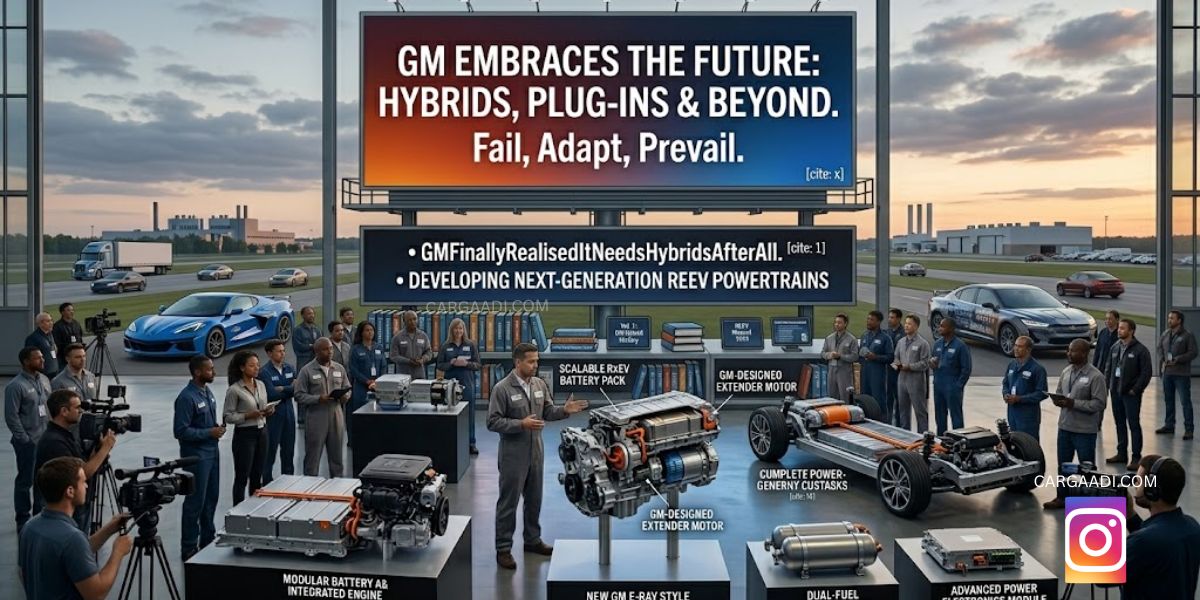
While other automakers continued investing in hybrids as a bridge between petrol and full EV ownership, GM pushed aggressively toward battery-electric vehicles and positioned EVs as the long-term destination.
But the market has changed faster than expected.
Charging infrastructure continues improving at different speeds, customer demand has become less predictable, and many buyers are showing renewed interest in vehicles that offer better efficiency without requiring a complete lifestyle change.
Now, GM appears to be adjusting.
The company is actively developing hybrid and plug-in hybrid strategies while continuing its long-term EV plans, signaling that the road to electrification may be more flexible than originally expected.
GM Is Not Abandoning EVs — It Is Expanding Its Options
This is not a dramatic reversal.
GM CEO Mary Barra has made it clear that the company still views fully electric vehicles as the long-term destination. But she has also confirmed that GM is working on plug-in hybrids and evaluating traditional hybrid options as market conditions evolve.
That distinction matters.
Instead of replacing EV plans, hybrids now appear to be returning as an additional layer in GM’s product strategy.
For buyers, that could mean more choices rather than fewer.
Expected Direction for GM’s Hybrid Expansion
| Category | Expected Direction |
|---|---|
| Long-Term Vision | Fully Electric Future |
| Near-Term Focus | Hybrid + Plug-In Hybrid Expansion |
| Vehicle Types | SUVs, Pickups, Passenger Vehicles |
| Technology | Hybrid, PHEV, Extended-Range Systems |
| EV Development | Continues Alongside Hybrids |
| Manufacturing Strategy | Flexible Multi-Powertrain Production |
Final product decisions and launch timing may vary by market and official announcements.
Why GM Changed Its Thinking
Customer Behavior Changed Faster Than Expected
One of the biggest reasons appears to be market reality.
GM has recently adjusted parts of its EV investment strategy after softer demand conditions and changing regulations affected planning. The company recorded major EV-related charges while continuing to support existing electric products.
At the same time, reports indicate GM delayed parts of its future full-size EV truck program and began exploring alternatives that include plug-in hybrid and extended-range solutions.
The goal seems practical.
Keep moving toward electrification without depending on one timeline.
Hybrids Suddenly Look More Important
Buyers Want Efficiency Without Big Adjustments
Hybrids occupy an interesting middle ground.
Drivers still fuel up normally but gain lower fuel consumption and, in some cases, short electric driving capability.
That balance has become increasingly attractive.
GM executives have acknowledged this changing environment and confirmed the company is preparing multiple hybrid products while still viewing EVs as the final destination.
Plug-In Hybrids Could Play a Bigger Role
Plug-in hybrids may become especially important because they allow electric driving for daily use while keeping long-distance flexibility.
Trucks May Benefit Too
Reports suggest hybrid and extended-range solutions could eventually become more relevant in GM’s large vehicle categories.
This Is Bigger Than One Company
GM’s shift reflects something happening across the industry.
Automakers are increasingly moving away from one-size-fits-all strategies.
Instead of assuming buyers will move entirely to EVs overnight, many companies are preparing multiple paths at once.
That does not mean EV adoption stops.
It means the transition may take longer—and look more varied—than earlier forecasts suggested.
Final Thoughts
GM spent years building an EV-first identity.
Now, it appears to be accepting that the market wants more flexibility.
Hybrids are no longer being treated as temporary technology. They are becoming an important bridge between traditional vehicles and a fully electric future.
For buyers, that could end up being good news.
More choice usually creates better products.
Disclaimer
This article is based on publicly available reports, executive statements, and industry reporting available at the time of writing. Future vehicle plans, hybrid strategies, EV investments, and launch schedules may change as General Motors releases official updates.