
For years, American car enthusiasts have repeated the same complaint.
“Why can’t we buy more wagons?”
Every time another wagon disappears from the market, the reaction looks familiar: people praise practicality, talk about lower ride heights, better driving dynamics, and insist they would absolutely buy one.
Then sales arrive.
And most people buy SUVs.
But something unexpected is happening on the other side of the world.
While wagons continue disappearing from many markets, China is quietly building some of the most ambitious, modern, and technology-packed long-roof cars anywhere.
And they are not treating wagons like niche products.
They are putting them at the center of the conversation.
The Wagon Is Not Dead — It Just Moved To China
For years, wagons looked like they were losing relevance globally.
Crossovers became the default answer for families.
SUVs became status symbols.
Traditional estate cars slowly moved toward premium European brands.
Then China started doing something different.
At recent auto shows and new-model launches, wagon-style vehicles began appearing not as nostalgia projects—but as flagship EVs, performance models, and design showcases.
That shift feels surprising because wagons usually occupy practical corners of showrooms.
Chinese brands seem to believe they can also be emotional.
China’s New Formula: Wagon + EV + Technology
The interesting part is not simply that China is building wagons.
It is the type of wagons being built.
Modern Chinese long-roof models increasingly combine:
What Makes These New Wagons Different
| Feature | Why It Matters |
|---|---|
| Electric Platforms | More interior space |
| Fast Charging | Better usability |
| Low Aerodynamic Shape | Higher efficiency |
| Performance Variants | Faster acceleration |
| Software Integration | More connected ownership |
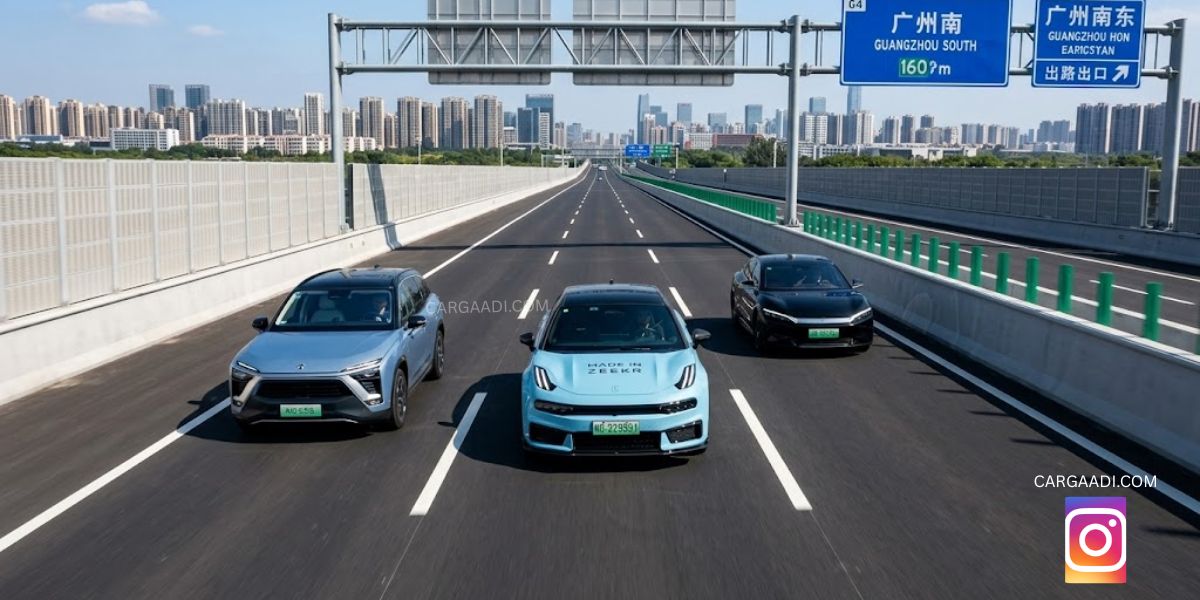
Models like the Zeekr 001 and touring-style EVs from brands including NIO helped create a category that feels more futuristic than traditional wagons. NIO has also confirmed development of another wagon model under its main brand.
America Keeps Asking For Wagons — But Buying SUVs
There is a strange contradiction in the U.S. market.
Online enthusiasm for wagons remains strong.
Actual sales have historically been much smaller.
That is one reason manufacturers gradually shifted investment toward crossovers and trucks.
American buyers often say they want:
- Wagon practicality
- Sedan driving feel
- SUV cargo space
But in showrooms, SUVs usually win.
That made wagons look like a niche.
China appears to be testing whether technology can change that.
Why EV Platforms May Secretly Be Perfect For Wagons
Electric architecture changes packaging.
Without a large engine and transmission tunnel, designers gain more freedom.
That creates an opportunity for wagons.
Wagon Vs SUV In The EV Era
| Category | Wagon | SUV |
|---|---|---|
| Aerodynamics | Better | Lower |
| Efficiency | Higher | Lower |
| Handling | Sharper | Softer |
| Cargo Flexibility | Strong | Strong |
| Ride Height | Lower | Higher |
That combination suddenly makes wagons feel modern again.
And China noticed earlier than most.
The Bigger Question Is Whether America Will Ever Get Them
That part remains uncertain.
Chinese brands still face major barriers entering the U.S. market, including tariffs and regulation, even as companies continue preparing long-term expansion plans.
So even if Americans keep asking for these cars, seeing them in local showrooms may not happen anytime soon.
But ideas travel faster than products.
If these wagons succeed globally, other manufacturers will pay attention.
Conclusion
China’s wagon boom feels unusual because it is happening at a time when much of the world moved on to SUVs.
Instead of treating wagons like leftovers from another era, Chinese automakers are turning them into stylish EVs, performance cars, and technology showcases.
And that creates an uncomfortable possibility.
Maybe people never stopped wanting wagons.
Maybe nobody was building the right ones.
Disclaimer
This article is based on publicly available market reporting, manufacturer announcements, and industry observations available at the time of writing. Product availability, specifications, and international market plans may change based on regional regulations and manufacturer strategy.