
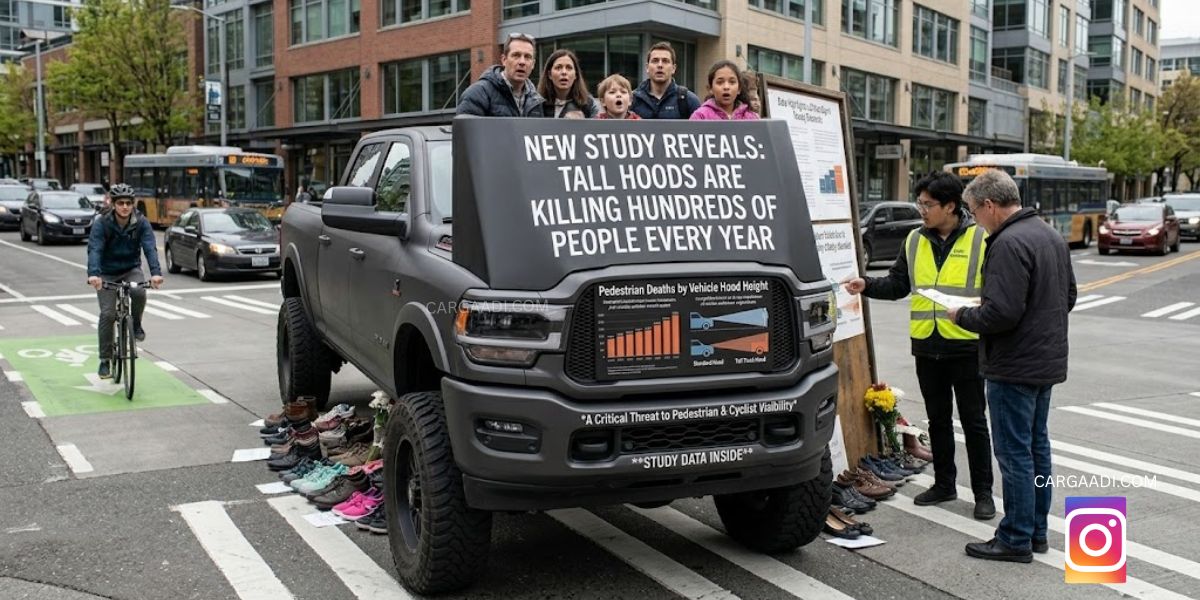
For years, bigger vehicles have been marketed as safer, stronger, and more capable.
But a new study is raising a difficult question: safer for whom?
According to recent research and analysis of U.S. crash data, the growing height of vehicle hoods—especially on large SUVs and pickup trucks—may be contributing to hundreds of additional pedestrian deaths every year. Researchers say this design shift has become an overlooked part of a larger road safety problem.
The Surprising Danger Hidden in Modern Vehicle Design
Modern vehicles look very different from the cars many people drove twenty years ago.
SUVs and trucks have become taller, wider, and more upright. While these changes can improve cabin space and occupant protection, researchers argue they may also create new risks outside the vehicle.
The concern is not simply vehicle size.
The biggest issue appears to be hood height and front-end shape.
What the Study Found
A recent investigation analyzing U.S. crash records, fatality databases, vehicle measurements, and registration data estimated that increasing hood heights contributed to roughly 3,000 pedestrian deaths between 2016 and 2024. That equals approximately 200 to 400 additional deaths every year that may not have happened if vehicle dimensions had remained closer to early-2000s levels.
Researchers also found that every additional inch of hood height increased pedestrian fatality risk by about 2.8% in the analyzed crash scenarios.
Those numbers do not mean tall hoods are the only reason pedestrian deaths happen—but they suggest vehicle design deserves more attention in safety conversations.
Why Taller Hoods Can Be More Dangerous
Impact Happens Higher on the Body
Lower vehicles often strike below a person’s center of gravity, which can push a pedestrian onto the hood where some crash energy gets absorbed.
Taller SUVs and trucks can hit closer to the torso, increasing the chance a person is knocked directly onto the road and into the vehicle’s path.
Visibility Becomes More Limited
Another issue highlighted by researchers is visibility.
Large hoods combined with thicker roof pillars and modern body structures can create larger blind zones directly in front of the vehicle. In some tested models, forward visibility areas became dramatically worse compared with earlier generations.
That visibility issue can become especially important around children, parking lots, intersections, and low-speed urban driving.
This Is Bigger Than SUVs Alone
Researchers and road safety experts caution against reducing the discussion to one vehicle category.
Road design, speed, distraction, phone use, weather conditions, and driver behavior all continue to play major roles in pedestrian safety. Automakers also point to technologies such as automatic emergency braking and pedestrian detection systems as important improvements.
Still, the study suggests vehicle shape itself may be an underappreciated factor.
What Could Change Next?
Some safety groups are now calling for stronger pedestrian-focused vehicle standards, better visibility testing, and future design rules that consider hood height alongside traditional crash protection. European transport researchers have also proposed studying limits on front-end dimensions in future regulations.
The conversation around road safety may no longer focus only on how vehicles protect people inside.
It may increasingly ask how they protect everyone outside, too.
Disclaimer
This article is based on publicly reported research, crash analysis, and published investigations available at the time of writing. Vehicle design is one factor among many that influence road safety outcomes, and the findings discussed represent statistical estimates rather than predictions for individual vehicles or drivers.