
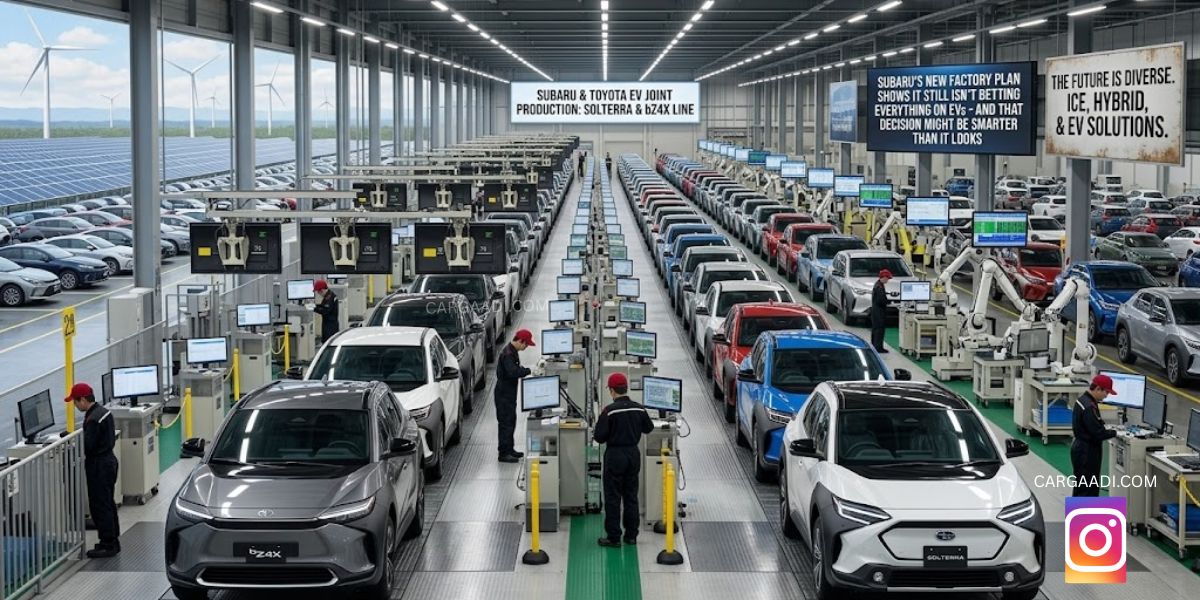
The automotive world has spent years talking as if one future was already decided.
Electric vehicles would take over, factories would rapidly transform, and traditional powertrains would quietly disappear.
But reality has turned out to be more complicated.
Consumer demand is changing at different speeds across different markets, charging infrastructure is still developing, and many buyers continue choosing hybrid and gasoline-powered vehicles. That is why Subaru’s latest factory strategy feels important.
Instead of going all-in on electric vehicles, Subaru appears to be preparing for something more flexible—a future where EVs grow while gasoline and hybrid vehicles continue to matter.
For a company known for careful decisions rather than dramatic moves, this may say more about the industry than many headlines do.
Subaru Is Expanding Flexibility Instead of Picking One Side
Subaru’s updated manufacturing direction suggests the company wants the ability to build multiple types of vehicles without locking itself into a single outcome.
Reports indicate Subaru plans to restructure production capacity to support both internal combustion and electric vehicle manufacturing depending on market demand.
Rather than replacing existing production lines entirely, the company appears focused on creating a more adaptable system. That allows faster shifts if customer preferences change over time.
This strategy reduces risk while keeping future options open.
Why Subaru Is Taking a Different Route
Demand Is Growing, But Not Equally Everywhere
Electric vehicle growth continues globally, but adoption rates vary widely.
Some markets are moving quickly.
Others still depend heavily on hybrids and conventional fuel vehicles.
Subaru’s approach suggests the company expects buyers to transition gradually instead of all at once.
That thinking aligns with what many manufacturers have started acknowledging publicly—different customers are moving at different speeds.
Expected Manufacturing Direction
| Category | Subaru Manufacturing Strategy |
|---|---|
| Primary Focus | Flexible Multi-Powertrain Production |
| EV Production | Expanding Gradually |
| Hybrid Development | Continued Investment |
| Petrol Models | Ongoing Support |
| Production Goal | Faster Demand Adjustment |
| Factory Approach | Shared Manufacturing Systems |
| Global Strategy | Mixed Electrification Portfolio |
Plans remain subject to official production schedules and market conditions.
Subaru Is Not Ignoring EVs
Electrification Still Matters
Choosing flexibility does not mean rejecting electric vehicles.
Subaru continues developing new EV products and strengthening partnerships to expand electrified offerings.
The difference is timing.
Instead of assuming one technology immediately replaces everything else, the company appears to be building a bridge between current customer behavior and future expectations.
That could help avoid expensive overcapacity if market demand changes unexpectedly.
Hybrid Technology May Become More Important
Hybrid vehicles continue attracting buyers who want lower fuel use without depending entirely on charging networks.
Existing Customers Still Matter
Subaru has traditionally built loyalty around practicality, reliability, and confidence in all weather conditions.
A gradual transition may feel more natural for its customer base.
What This Means for Buyers
For customers, this approach could create more choice rather than less.
Instead of forcing a rapid transition, Subaru appears interested in offering multiple paths depending on infrastructure, budget, and personal preference.
That flexibility may become increasingly valuable as the industry continues evolving.
Consumers are not all asking for the same thing.
Subaru seems to recognize that.
Final Thoughts
Subaru’s factory strategy is not necessarily a rejection of electric vehicles.
It looks more like a reminder that automotive transitions rarely happen overnight.
By preparing to build EVs while continuing investment in hybrids and traditional models, Subaru may be positioning itself for a future that is less predictable—and more realistic—than many expected.
Sometimes the biggest strategic move is keeping more than one option open.
Disclaimer
This article is based on publicly available reports and manufacturer information available at the time of writing. Production plans, timelines, electrification strategies, and future product decisions may change depending on market conditions and official announcements.