
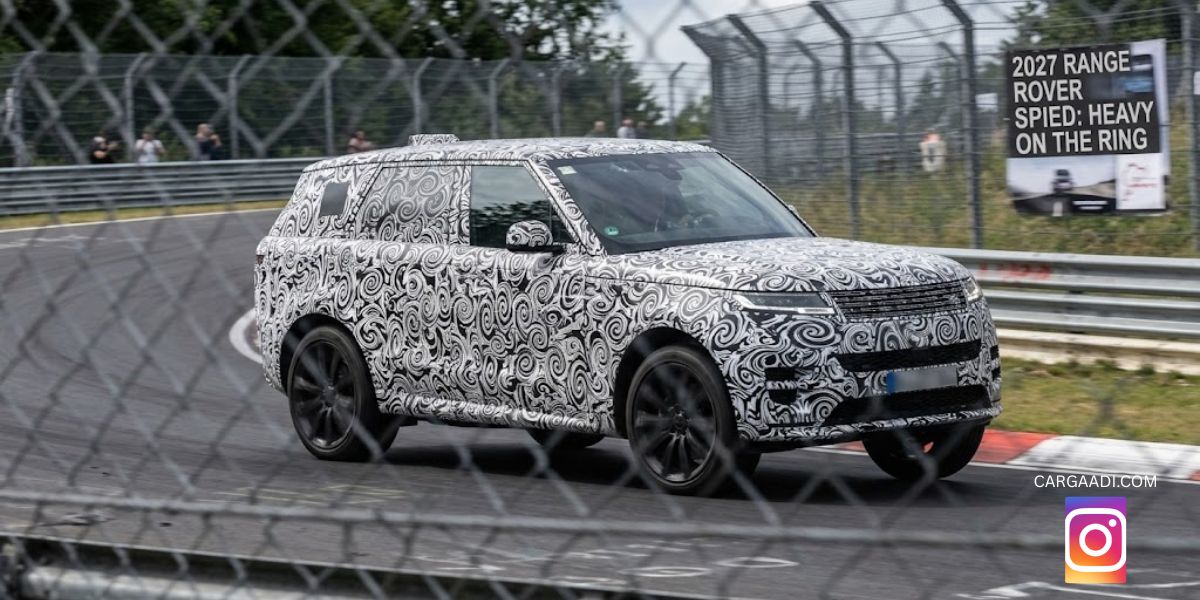
Fresh spy shots from Nürburgring testing have given enthusiasts an early look at the upcoming 2027 Range Rover facelift, and the first reaction from many people was immediate—the SUV looks surprisingly heavy and planted through the corners.
But appearances can be misleading.
Testing at the Nürburgring is rarely about looking fast in photographs. It is about pushing suspension, steering, cooling, braking, and body control to their limits long before customers ever see the final production version. Recent prototype images suggest Land Rover is using Germany’s famous circuit to refine far more than styling.
Why Does the New Range Rover Look So Heavy?
Large luxury SUVs always face an unusual challenge.
They need to deliver commanding road presence and exceptional comfort while still feeling controlled at speed.
In spy photos, the camouflaged 2027 Range Rover appears to sit flatter and lower through corners, creating a visual impression of weight even if actual dynamics improve. This effect often becomes more noticeable because Nürburgring photography captures vehicles under extreme compression and body load.
That does not automatically mean the SUV has become less athletic.
If anything, testing at this level usually means engineers are actively tuning ride balance and chassis responses.
What Changes Are Expected for the 2027 Range Rover?
A Cleaner Exterior Rather Than a Full Redesign
The latest prototypes suggest Land Rover is focusing on evolution instead of revolution.
Visible updates appear to include:
- Redesigned headlights
- Updated grille treatment
- Revised front bumper
- Refreshed rear lighting signatures
- Minor exhaust and rear styling adjustments
These changes point toward a mid-cycle refresh rather than an entirely new generation.
The Bigger Story May Be Inside
Technology and Cabin Improvements Could Matter More
Reports around the prototypes indicate interior updates may be just as important as the exterior changes.
Land Rover appears to be moving toward a more unified design language across the Range Rover family while introducing improvements to infotainment and cabin technology.
That approach makes sense.
Current Range Rover models already emphasize refinement, advanced suspension systems, digital interfaces, and luxury-focused engineering rather than chasing outright sports-car behavior.
Nürburgring Testing Tells an Interesting Story
Luxury SUVs Are Being Developed Differently Today
Years ago, seeing a large luxury SUV attacking Nürburgring corners felt unusual.
Today, it has become normal.
Manufacturers use the circuit not because owners will drive there every weekend, but because demanding conditions reveal weaknesses faster than everyday roads ever could.
For Range Rover, that likely means improving composure, reducing unwanted body movement, and making a large vehicle feel more confident without sacrificing comfort.
Should Buyers Expect a Sportier Range Rover?
Probably not in the traditional sense.
The Range Rover’s identity has always been built around effortless performance rather than aggressive handling.
The 2027 update looks more focused on refinement, cleaner styling, and better overall polish than turning the luxury SUV into a Nürburgring record holder.
And that may be exactly what Range Rover buyers want.
Disclaimer
This article is based on publicly available spy photography, manufacturer information, and industry reporting available at the time of writing. Final specifications, design details, features, and launch timing may change before official production and release.