
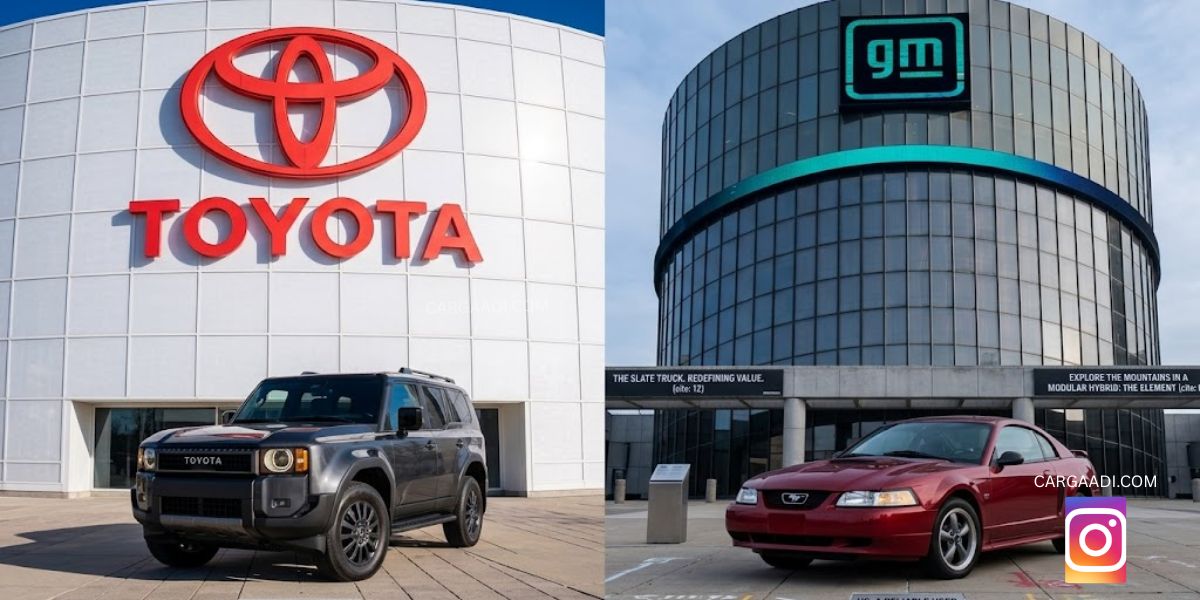
For decades, the top spot in America’s auto industry felt almost untouchable.General Motors became more than just a car company—it became the benchmark. Through changing fuel prices, economic cycles, technology shifts, and changing customer preferences, GM held onto an extraordinary achievement.
Dominance.
But now the gap is narrowing again.
Fresh industry forecasts suggest Toyota is getting closer than it has been in years to challenging General Motors for the title of America’s best-selling automaker, creating what could become one of the most important sales battles in recent automotive history.
If the trend continues, a streak stretching back roughly 95 years could face one of its biggest tests.
This Is Not Just About Volume — It Is About Strategy
Toyota’s momentum did not appear overnight.
For years, the company invested heavily in a broader powertrain approach rather than committing entirely to one future. That strategy now appears to be paying off as demand for hybrid vehicles continues strengthening across the U.S. market.
According to forecasts from Cox Automotive cited in recent reporting, Toyota’s U.S. market share could reach 15.8% during the first half of the year, while GM is projected near 16.8%, making the race significantly tighter than many expected.
The difference is still meaningful.
But suddenly, it no longer feels impossible.
U.S. Sales Battle Snapshot (Forecast-Based)
| Category | Toyota | GM |
|---|---|---|
| Estimated U.S. Market Share | 15.8% | 16.8% |
| Sales Momentum | Stable to Growing | Under Pressure |
| Strength Area | Hybrids + Broad Portfolio | Trucks + SUVs |
| Electrification Strategy | Multi-Path Approach | EV + Expanded Hybrid Direction |
| Current Position | Chasing Leader | Defending Crown |
Figures reflect forecasts and industry estimates rather than final year-end results.
Hybrid Demand Is Becoming A Bigger Force Than Expected
Buyers Want Efficiency Without Major Lifestyle Changes
One of the biggest reasons Toyota is gaining attention comes from customer behavior.
Many buyers still want lower fuel costs and improved efficiency, but they are not all ready to move directly into fully electric vehicles.
Toyota’s hybrid lineup appears well positioned for that middle ground. Recent reporting suggests hybrid demand is helping Toyota strengthen its position while competitors continue adjusting their own electrification plans.
This does not mean EVs are disappearing.
It means the market may be moving more gradually than earlier forecasts expected.
GM Still Has Major Advantages
The Crown Has Not Changed Hands Yet
Despite the headlines, GM remains the sales leader.
The company continues benefiting from a powerful truck and SUV portfolio, broad dealer reach, and growing investment across electric and traditional vehicle categories.
Industry analysts are not predicting a guaranteed Toyota victory.
They are saying the possibility now feels real.
That alone makes the story important.
Scale Still Matters
GM remains one of the strongest automotive forces in North America.
Competition Creates Better Products
A tighter race often pushes companies to move faster.
Why This Moment Feels Bigger Than A Sales Chart
This story reflects something larger happening across the industry.
Customers are reshaping the market.
Instead of moving in one direction together, buyers are choosing different paths—hybrids, petrol, EVs, SUVs, and more efficient daily vehicles.
Automakers that adapt fastest may gain the advantage.
And right now, Toyota appears positioned to challenge expectations again.
Final Thoughts
Ending a 95-year sales reign would be historic.
But even if Toyota does not finish first, the fact that the conversation is happening says a lot.
The American car market is changing.
Strategies that looked conservative a few years ago suddenly appear surprisingly well timed.
And for GM, that means one thing.
The fight for the top spot may be more competitive than it has been in years.
Disclaimer
This article is based on publicly available forecasts, industry reporting, and company sales updates available at the time of writing. Market share estimates, sales rankings, and final annual results may change as additional data becomes available.