
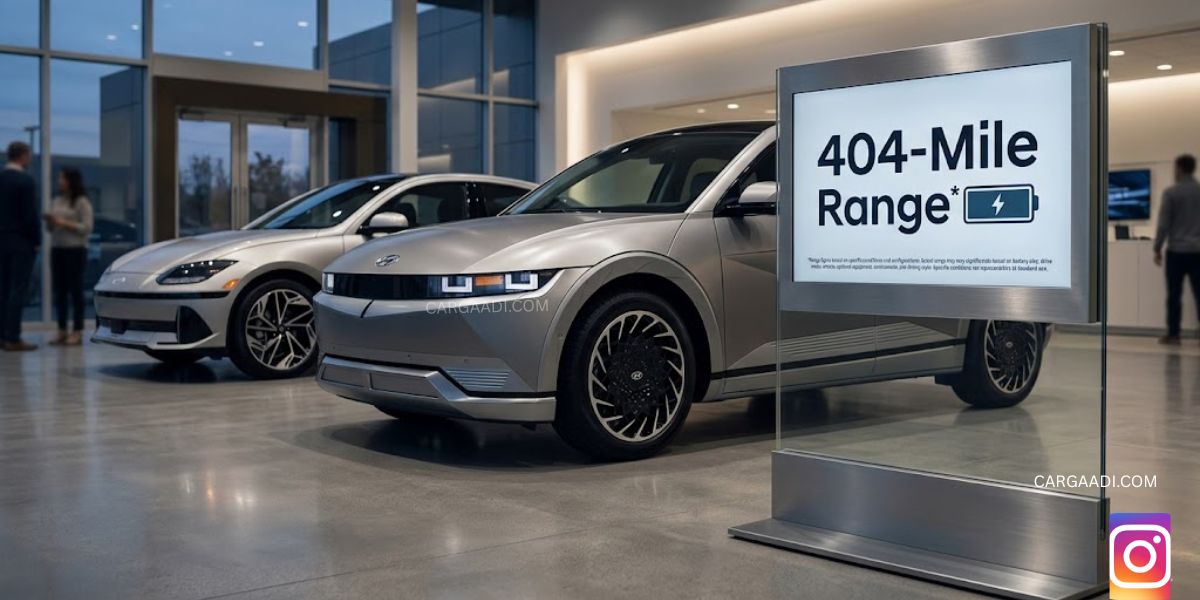
A headline figure of 404 miles of electric range sounds almost unbelievable. For many buyers, that number immediately suggests an electric car that can comfortably handle long-distance travel with fewer charging stops.
But as always with EV announcements, the details matter.
Hyundai’s latest range claim for its Ioniq electric vehicle lineup has generated attention because the headline number looks extremely impressive at first glance. Once the testing method and certification details are understood, the story becomes more interesting—and much more realistic.
That does not make the car disappointing. It simply shows why EV range figures should always be viewed in context.
Where the 404-Mile Number Comes From
The widely discussed 404-mile figure comes from the WLTP (Worldwide Harmonised Light Vehicle Test Procedure) cycle for the latest Hyundai Ioniq 6 long-range specification. WLTP testing is commonly used in Europe and typically produces higher range estimates compared with U.S. EPA testing because of differences in driving conditions and measurement methods.
The number is impressive, but it is not intended to represent identical real-world driving results for every driver and every condition.
Hyundai’s claim is technically valid under the applicable certification process.
Why EV Range Numbers Can Look Very Different in Real Life
Electric vehicle range depends on more than battery size.
Driving speed, weather conditions, terrain, climate control usage, passenger load, wheel size, and driving style all influence the final distance a driver actually sees.
High-speed highway driving in particular can reduce achievable range compared with standardized laboratory testing.
That is why manufacturers usually publish certified testing figures rather than promising a fixed real-world number.
Understanding the Different Testing Standards
| Test Standard | Typical Character |
|---|---|
| WLTP | More optimistic, Europe-focused |
| EPA | Generally more conservative |
| Real-World Driving | Varies by conditions |
Because of those differences, a vehicle showing more than 400 miles under WLTP may deliver a lower number during daily ownership depending on usage.
The Hyundai Ioniq 6 Is Still Built for Efficiency
The bigger story may actually be efficiency rather than the headline itself.
Hyundai designed the Ioniq 6 with a strong focus on aerodynamics and energy management. Its streamlined body shape, low drag profile, and optimized EV platform contribute significantly to extending usable driving distance.
Unlike some larger electric SUVs that rely heavily on oversized batteries, the Ioniq approach emphasizes getting more range from every unit of stored energy.
Key Efficiency Elements
Expected highlights include:
- Aerodynamic fastback profile
- Dedicated EV platform
- Advanced regenerative braking
- Battery thermal management
- Fast charging capability
- Optimized energy consumption
This strategy helps explain why the vehicle achieves such strong certification numbers.
Hyundai Ioniq 6 Technical Specifications
| Specification | Hyundai Ioniq 6 Long Range |
|---|---|
| Vehicle Type | Electric Sedan |
| Platform | E-GMP |
| Battery | 77.4 kWh |
| Drive Options | RWD / AWD |
| Maximum Certified Range | Up to 404 Miles (WLTP) |
| Charging | Ultra-Fast DC Charging Supported |
| 0–100 km/h | Around 5 Seconds (Variant Dependent) |
| Seating | 5 |
Specifications may vary depending on market and configuration.
Pricing and Market Positioning
The Hyundai Ioniq 6 continues to position itself as a premium electric sedan focused on efficiency and long-distance usability.
Pricing varies depending on market, trim, and drivetrain selection.
| Variant | Expected Starting Range |
|---|---|
| Hyundai Ioniq 6 | Market Dependent |
Regional taxes, incentives, and specifications may affect final pricing.
Why Buyers Should Look Beyond One Number
Range matters—but it is not the only thing that determines EV ownership satisfaction.
Charging speed, charging availability, comfort, software experience, efficiency, and ownership costs often matter just as much during everyday use.
For many buyers, an efficient EV with predictable charging behavior can feel more useful than a vehicle with an eye-catching certified range figure.
Hyundai’s approach with the Ioniq lineup appears focused on balancing those factors rather than chasing headline numbers alone.
Conclusion
The 404-mile figure attached to Hyundai’s Ioniq EV certainly grabs attention—but understanding the testing method changes the conversation.
That number reflects certified laboratory conditions rather than guaranteed real-world performance. Even so, the Ioniq 6 remains one of the more efficiency-focused electric vehicles available today and shows how smart engineering can stretch range without simply adding a larger battery.
The fine print does not make the achievement less impressive—it simply helps set realistic expectations.
Disclaimer
This article is based on publicly available certification figures, manufacturer information, and market reports available at the time of writing. Actual driving range, charging performance, pricing, and specifications may vary depending on region, weather conditions, driving behavior, and official vehicle configuration.