
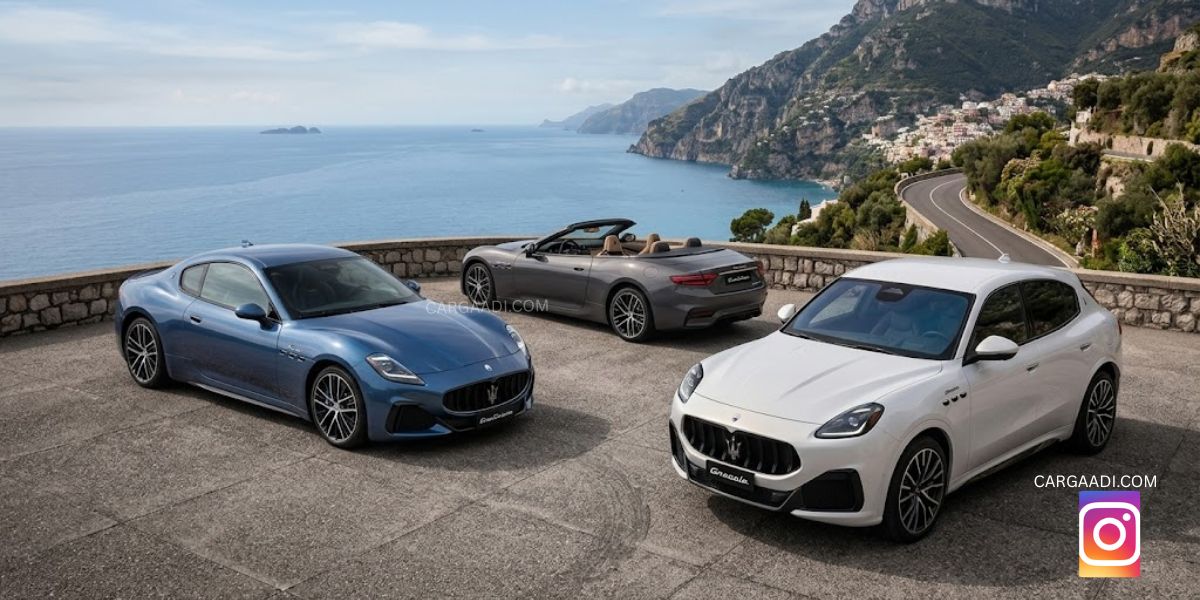
The Italian luxury brand has officially introduced updates for its three most important modern products—the GranTurismo, GranCabrio, and Grecale. On paper, the changes look meaningful: more power, improved EV range, refreshed styling, upgraded interiors, and broader customization.
But there is a bigger question hanging over this launch.
Can updated cars alone bring Maserati back to where a luxury performance brand with this much history is expected to be?
That question matters because the updates arrive during one of the most important periods in Maserati’s recent history.
Why These Updates Matter More Than a Typical Facelift
This is not a routine model refresh.
Maserati’s parent company, Stellantis, is preparing a broader strategic reset for the brand while continuing to publicly support its future rather than selling it. The company has confirmed that Maserati remains a core luxury project and additional new vehicles are planned in the coming years.
At the same time, recent financial results have put pressure on the brand.
Reports show Maserati recorded an operating loss of approximately €198 million last year, while global shipments fell below 8,000 vehicles.
That makes these product updates more important than usual.
GranTurismo and GranCabrio Receive More Than Cosmetic Changes
The updated GranTurismo coupe and GranCabrio convertible continue to serve as Maserati’s emotional flagship models.
Visually, Maserati has sharpened the front-end design with styling cues inspired by the MC20 and GT2 Stradale. The refreshed cars receive revised lighting, updated wheels, aerodynamic revisions, and cabin upgrades including a redesigned steering wheel and updated digital interfaces.
Performance also receives attention.
The Trofeo versions now produce 582 horsepower, representing an increase of around 40 hp over the previous setup. Maserati has also introduced a new Country Mode, increasing ride height to improve usability on less predictable roads.
GranTurismo / GranCabrio Technical Specifications
| Specification | Updated GranTurismo / GranCabrio |
|---|---|
| Engine | 3.0L Twin-Turbo Nettuno V6 |
| Power (Trofeo) | 582 hp |
| Drivetrain | AWD |
| Transmission | Automatic |
| Electric Variant | Folgore Available |
| Key Updates | New Styling, Interior, Range Improvements |
Final market specifications may vary.
Grecale Gets a More Important Upgrade Than It Looks
If one model may ultimately decide Maserati’s future, it could be the Grecale.
Luxury SUVs continue driving sales across the industry, and Grecale remains one of Maserati’s most important volume opportunities.
The updated Grecale receives styling revisions, interior refinements, new wheels, and expanded customization.
But the bigger change sits under the hood.
Maserati has moved toward a stronger V6-focused lineup. The updated Grecale introduces a 385-hp twin-turbo Nettuno V6 in lower trims while the Trofeo continues offering up to 523 hp.
The electric Grecale Folgore also receives efficiency improvements, pushing estimated range to around 268–274 miles depending on market measurement methods.
Grecale Technical Specifications
| Specification | Maserati Grecale |
|---|---|
| Engine | Twin-Turbo 3.0L Nettuno V6 |
| Base Output | 385 hp |
| Trofeo Output | 523 hp |
| EV Variant | Folgore |
| Estimated EV Range | Up to 274 Miles |
| Drive Type | AWD |
But Are Better Cars Enough?
This is where the conversation becomes more complicated.
Historically, Maserati’s biggest challenge has not always been design or driving experience.
The brand still carries questions around:
- Long-term value retention
- Product positioning
- Dealer experience
- Technology competitiveness
- Brand perception inside Stellantis
Community reactions after the reveal have reflected that split. Some enthusiasts praised the cleaner appearance and stronger V6 focus, while others argued the changes feel too small for the scale of Maserati’s current challenge.
The updates improve the products.
Whether they improve the business is a different question.
Maserati’s Real Test Starts After the Reveal
Luxury brands survive when customers feel they are buying something emotionally special—not simply a premium specification sheet.
Maserati still has things many competitors would love to own:
- Strong Italian design identity
- Motorsport heritage
- Distinctive engines
- Global brand recognition
But the market has become more demanding.
Buyers now expect exclusivity, reliability, software quality, ownership experience, and strong resale values alongside performance.
Conclusion
The updated GranTurismo, GranCabrio, and Grecale show that Maserati is not standing still.
More power, better EV usability, refreshed styling, and broader personalization make the lineup stronger than before.
But saving the Trident will likely require more than refreshed products.
The next phase will depend on whether Maserati can turn beautiful cars into sustainable demand—and convince luxury buyers that the brand deserves a place in a market that has become more competitive than ever.
Disclaimer
This article is based on publicly available manufacturer information, media reports, and industry coverage available at the time of writing. Specifications, availability, pricing, market plans, and future product strategy may change following official announcements from Maserati and Stellantis.