
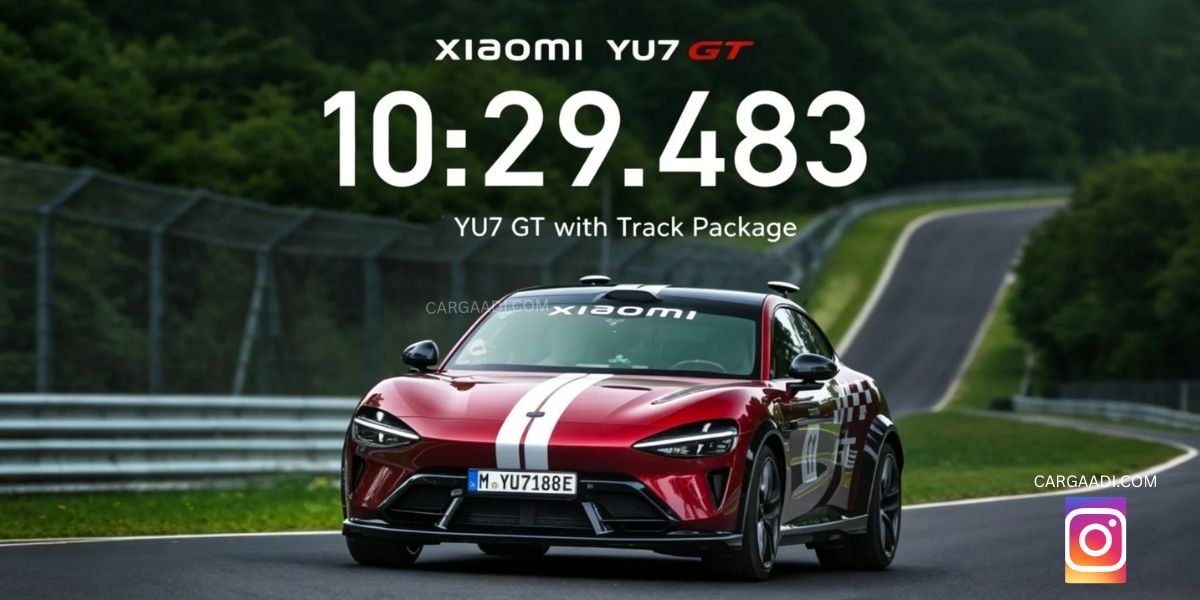
The Nürburgring has measured speed for decades.
Manufacturers arrive with powerful engines, race drivers, and bold promises. Every fast lap becomes part of automotive history.
But this latest record attempt looked very different.
No driver.
No steering inputs.
Just software, sensors, and a car completing one of the world’s most demanding circuits on its own.
That achievement belongs to Xiaomi, which recently completed what is being described as the Nürburgring’s first officially recognized driverless lap record.
It is an impressive milestone.
But there is one important catch.
It is not the world’s first autonomous lap record.
A Historic Nürburgring Moment — But Not The First Autonomous Record Ever
According to reports, Xiaomi completed a fully autonomous lap at the Nürburgring using technology developed around its intelligent driving platform. The achievement marks the first officially recognized driverless record at the Nürburgring circuit.
That alone makes it significant.
The Nürburgring is not a simple testing ground.
Its long layout, elevation changes, unpredictable corners, and changing grip levels make autonomous driving extremely difficult.
But globally, autonomous driving has already achieved similar milestones elsewhere.
Projects from universities and autonomous racing programs completed record-setting driverless laps years before this Nürburgring run.
That does not reduce Xiaomi’s accomplishment.
It adds context.
Why Nürburgring Matters More Than A Straight-Line Record
Driverless performance is not only about speed.
It is about decision-making.
At the Nürburgring, autonomous systems must continuously handle:
- Braking points
- Steering precision
- Corner transitions
- Elevation changes
- Vehicle stability
Unlike controlled proving grounds, this track rewards adaptability.
That is one reason automakers still value Nürburgring results so heavily.
Xiaomi Autonomous Nürburgring Run – Key Details
| Category | Details |
|---|---|
| Achievement | Driverless Nürburgring Lap |
| Vehicle Type | Autonomous Test Vehicle |
| Driver Input | None |
| Circuit | Nürburgring |
| Recognition | First Official Driverless Nürburgring Record |
| Technology Focus | Autonomous Driving System |
Final technical details depend on official testing disclosures.
The Bigger Story Is That Xiaomi Is Expanding Fast
Many people still associate Xiaomi primarily with smartphones and consumer electronics.
But the company’s automotive ambitions have become increasingly serious.
Its vehicle programs have focused heavily on software integration, connected systems, electric performance, and intelligent driving capabilities.
Achievements like this suggest Xiaomi wants credibility beyond simply building EVs.
It wants to compete on technology leadership.
And records attract attention.
Autonomous Driving Records Have Been Building For Years
The phrase “world’s first” appears often in technology.
Reality is usually more complicated.
Before Xiaomi’s Nürburgring run, autonomous vehicles had already completed:
Earlier Autonomous Milestones
| Achievement Area | Previous Examples |
|---|---|
| Autonomous Speed Records | Dedicated test programs |
| Driverless Racing | Autonomous competition series |
| Research Laps | University engineering teams |
| Closed-Circuit Testing | Industry development projects |
That does not make Xiaomi late.
It shows the technology has been evolving quietly for years.
What Matters More Than The Lap Time
Records generate headlines.
Real-world performance builds trust.
The bigger challenge for autonomous systems remains everyday driving:
Urban traffic.
Unexpected obstacles.
Weather.
Human unpredictability.
Track success demonstrates capability.
Public roads demand consistency.
That transition remains the industry’s hardest challenge.
Conclusion
Xiaomi’s Nürburgring achievement deserves attention.
Setting the circuit’s first recognized driverless lap record is a meaningful milestone and highlights how quickly automotive technology is evolving.
At the same time, it is not the world’s first autonomous record.
And perhaps that makes the achievement more interesting.
This was not about being first.
It was about proving driverless technology can perform on one of the toughest tracks in the world.
Disclaimer
This article is based on publicly reported information and available testing details at the time of writing. Recognition categories, autonomous capabilities, technical specifications, and official validation standards may vary by organization and event definitions.