

In recent days, news about the hantavirus outbreak has created fear and confusion among many people. Hearing about a dangerous virus spreading through rodents can naturally make people anxious, especially after the world has already faced several health crises in recent years. But understanding the facts can help reduce panic and encourage smart precautions.
Hantavirus is a rare but serious viral infection mainly spread through contact with infected rodents, especially their urine, saliva, and droppings. Health experts say the virus is not easily spread between humans in most cases, which is an important reason not to panic.
What Is Hantavirus?
Hantavirus is a family of viruses that can cause severe illness in humans. The infection mainly affects the lungs and kidneys and may lead to serious breathing problems if not treated quickly. According to health experts, people usually become infected after breathing air contaminated with tiny particles from rodent waste.
The disease is considered rare, but doctors warn that early symptoms can quickly become dangerous if ignored.
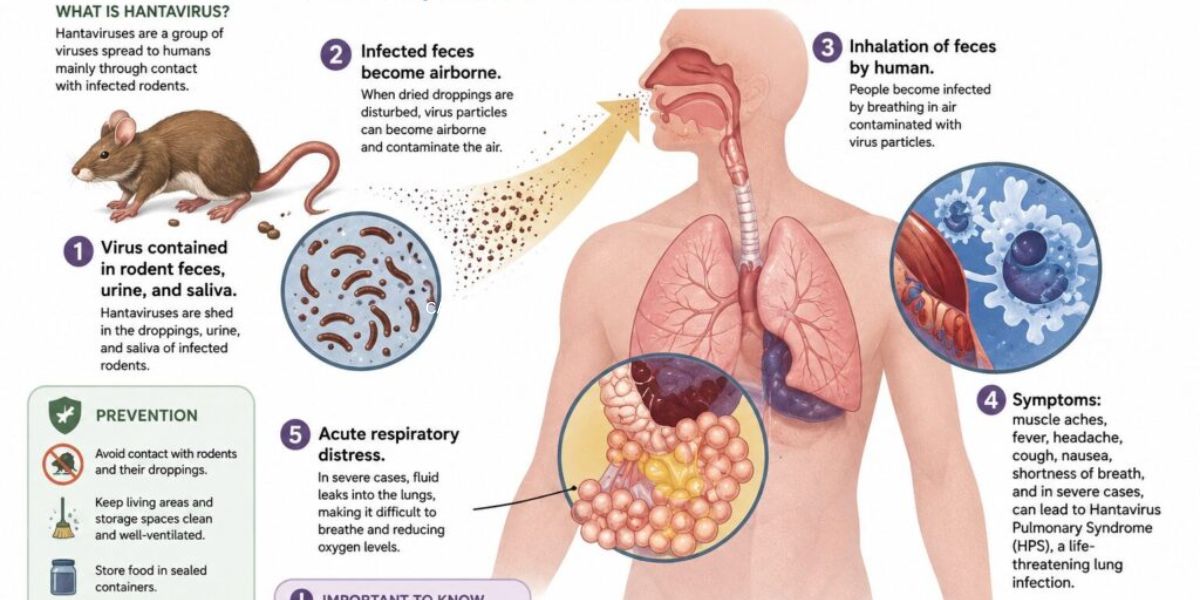
How Does Hantavirus Spread?
The virus is commonly linked to rats and mice living in homes, farms, cabins, storage rooms, and poorly ventilated spaces. Infection may happen when a person cleans an area contaminated with rodent droppings without proper protection.
Experts explain that activities like sweeping or vacuuming dry rodent waste can release harmful virus particles into the air.
In most cases, hantavirus does not spread easily from person to person. However, certain rare strains, such as the Andes virus found in South America, have shown limited human-to-human transmission.
Symptoms That Should Never Be Ignored
One of the biggest concerns about hantavirus is that its early symptoms often look similar to common flu or viral fever. Because of this, many people may not realize the seriousness of the infection in the beginning.
Early Symptoms
The illness often starts with fever, body pain, fatigue, headaches, and muscle aches. Some people also experience nausea, vomiting, stomach pain, or dizziness.
At first, these symptoms may seem mild, but doctors say the condition can worsen suddenly.
Severe Symptoms
As the disease progresses, patients may develop coughing, chest tightness, and serious breathing difficulty due to fluid buildup in the lungs. In some cases, kidney failure and organ complications may also occur.
Medical experts warn that immediate treatment is important once breathing problems begin.
Why Are Health Authorities Concerned?
Recent reports suggest that international health agencies are closely monitoring suspected hantavirus cases connected to a cruise ship outbreak. Some cases and deaths have already been reported, leading authorities to increase monitoring and emergency response efforts.
Even though the public risk remains low, health organizations are encouraging awareness and preventive measures to avoid further spread.
How People Can Protect Themselves
The good news is that simple safety habits can greatly reduce the risk of hantavirus infection.
Keep Homes and Surroundings Clean
Rodents are attracted to leftover food, garbage, and cluttered spaces. Keeping homes clean and sealing holes or cracks can help prevent rats and mice from entering living areas.
Avoid Unsafe Cleaning Methods
Experts strongly advise against dry sweeping or vacuuming rodent droppings. Instead, contaminated areas should be sprayed with disinfectant before cleaning. Wearing gloves and masks while cleaning enclosed spaces is also recommended.
Stay Alert to Symptoms
Anyone experiencing flu-like symptoms after exposure to rodents or rodent-infested areas should seek medical attention immediately. Early diagnosis can improve the chances of recovery.
Is There a Treatment for Hantavirus?
Currently, there is no specific cure or vaccine for hantavirus infection. Doctors mainly provide supportive care such as oxygen therapy, hydration, and treatment for breathing complications.
Medical experts say early hospital care can significantly improve survival chances.
Staying Informed Without Fear
Outbreak news can spread fear very quickly, especially on social media. However, health experts continue to emphasize that hantavirus remains relatively rare. Awareness, cleanliness, and proper precautions are the best ways to stay protected.
Instead of panic, people should focus on understanding the symptoms, maintaining hygiene, and following official health advice.
Disclaimer
This article is for general informational and educational purposes only. It should not be considered medical advice, diagnosis, or treatment. If you experience symptoms or believe you may have been exposed to hantavirus, please consult a qualified healthcare professional immediately. Always follow guidance from official health authorities and medical experts.