
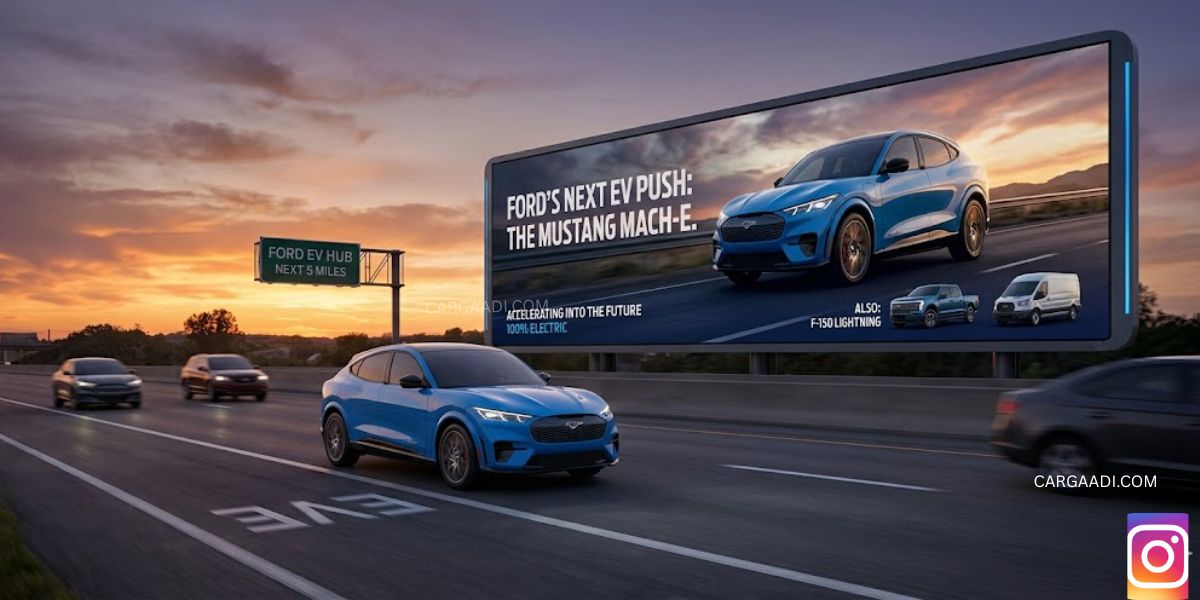
A few years ago, the Ford Mustang Mach-E represented Ford’s electric future.
It was bold, controversial, and important. It gave Ford an early position in the mainstream EV race and showed that a traditional automaker could build an electric vehicle people actually wanted.
But now, Ford’s next chapter may be heading in a different direction.
Recent reports suggest Ford’s upcoming EV strategy will focus heavily on a new, lower-cost architecture aimed at improving efficiency, manufacturing simplicity, and affordability—and surprisingly, the Mach-E is not expected to move onto that platform.
That does not mean the Mach-E is disappearing.
But it does raise an interesting question: what happens when the car that launched the journey is no longer leading it?
Ford’s New EV Direction Looks Very Different
Ford’s early EV era focused on proving that electric vehicles could compete with established products.
Now the company appears more focused on making EVs sustainable as a business.
Reports indicate Ford’s future strategy centers around a new Universal EV Platform designed to reduce cost and improve production efficiency across multiple upcoming models. The company is reportedly targeting more affordable EVs instead of relying primarily on larger and more expensive electric vehicles.
That shift matters because Ford’s EV division reportedly lost billions of dollars while demand patterns changed and competition intensified.
The Surprise: Mach-E Is Not Moving To The New Platform
This is the part attracting attention.
Ford has confirmed that the Mustang Mach-E will not migrate to the company’s upcoming Universal EV Platform.
That does not automatically make the Mach-E obsolete.
But it suggests Ford may treat the Mach-E differently from its next generation of mass-market electric products.
Possible reasons include:
Why Ford May Keep The Mach-E Separate
- Preserving the Mach-E’s identity
- Avoiding expensive redesign costs
- Maintaining performance positioning
- Separating premium EVs from affordable EV programs
- Extending the life of the current architecture
For now, Ford has not announced plans to end the Mach-E.
The Mach-E Is Still A Strong Product
Despite strategic changes, the Mach-E remains one of Ford’s most recognizable electric vehicles.
The 2026 lineup continues offering multiple trims, long-range battery options, performance upgrades, and technology-focused features. Ford has also introduced fresh appearance packages and equipment updates.
Ford Mustang Mach-E Technical Specifications (2026)
| Specification | Ford Mustang Mach-E |
|---|---|
| Vehicle Type | Electric SUV |
| Battery Options | 73 kWh / 88 kWh |
| Maximum Range | Up to 320 Miles (EPA Est.) |
| Drivetrain | RWD / eAWD |
| Maximum Horsepower | Up to 480 hp |
| Charging | DC Fast Charging |
| Seating Capacity | 5 |
Specifications vary depending on trim and market.
Small Changes Suggest Bigger Priorities
The 2026 Mach-E also received several packaging changes.
Some standard convenience features were removed or turned into optional equipment, including adjustments to storage solutions and feature availability. Reports suggest Ford is becoming more selective about what remains standard as it balances cost and product positioning.
Those decisions may look minor individually.
But together, they hint at a company becoming more disciplined about EV profitability.
Being “Left Behind” Does Not Mean Being Forgotten
There is another way to look at this.
Instead of becoming outdated, the Mach-E could evolve into something more specialized.
Ford’s future affordable EV lineup may focus on scale and efficiency.
The Mach-E could continue serving buyers who want stronger design identity, performance options, and a more premium experience.
That separation could actually help the model.
Conclusion
The Ford Mustang Mach-E helped define Ford’s electric ambitions.
But Ford’s next EV phase appears less focused on flagship statements and more focused on affordability, efficiency, and scale.
Being left off the next platform does not necessarily mean the Mach-E loses importance.
It may simply mean its role is changing.
And sometimes, the vehicle that opens the door is not the same one that leads the next generation.
Disclaimer
This article is based on publicly available reports, manufacturer information, and industry coverage available at the time of writing. Future platform decisions, pricing, specifications, production plans, and product strategy remain subject to official confirmation from Ford.