
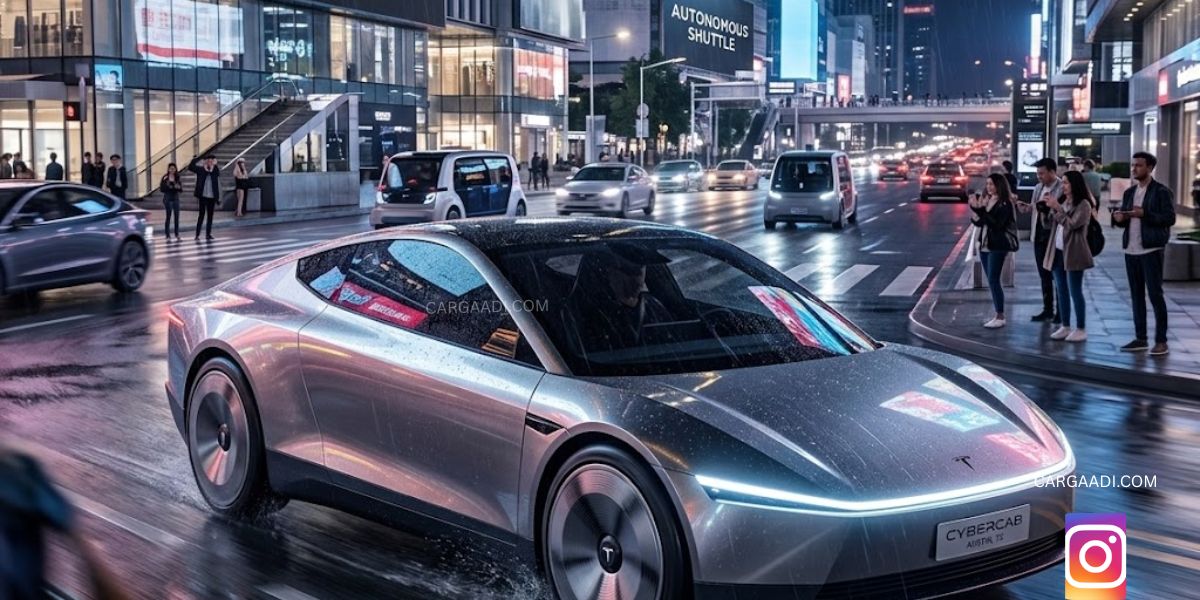
Tesla’s futuristic Cybercab is no longer just a bold concept with dramatic styling and ambitious promises. Official documents have now revealed the first detailed performance numbers for the upcoming autonomous electric vehicle, giving us a much clearer picture of what Tesla is planning for its next major mobility project.
Positioned as a purpose-built robotaxi and expected to carry a starting price close to $30,000, the Cybercab takes a very different approach compared to traditional Tesla models. Instead of chasing extreme acceleration or oversized batteries, Tesla appears focused on efficiency, lower operating costs, and maximizing driving range.
Official Tesla Cybercab Figures Are Finally Here
Newly revealed EPA-related documentation gives the clearest look yet at the Cybercab’s hardware package.
According to the released specifications, Tesla’s upcoming two-seater autonomous EV is expected to feature:
- 219 horsepower
- 48 kWh battery pack
- Front-wheel drive layout
- 418 miles equivalent electric range (unadjusted EPA figure)
- 3,113 lbs curb weight
At first glance, the battery size looks surprisingly small compared to many modern EVs. However, Tesla’s strategy appears to be reducing weight and improving efficiency rather than continuously increasing battery capacity.
Tesla Focused on Efficiency Instead of Bigger Batteries
One of the biggest surprises is how efficient the Cybercab appears to be.
Reports indicate energy consumption is rated at approximately 165 Wh per mile, making it one of the most efficient electric vehicles ever revealed. For comparison, many larger electric vehicles consume substantially more energy to achieve similar driving distances.
The lower weight helps explain the impressive figures.
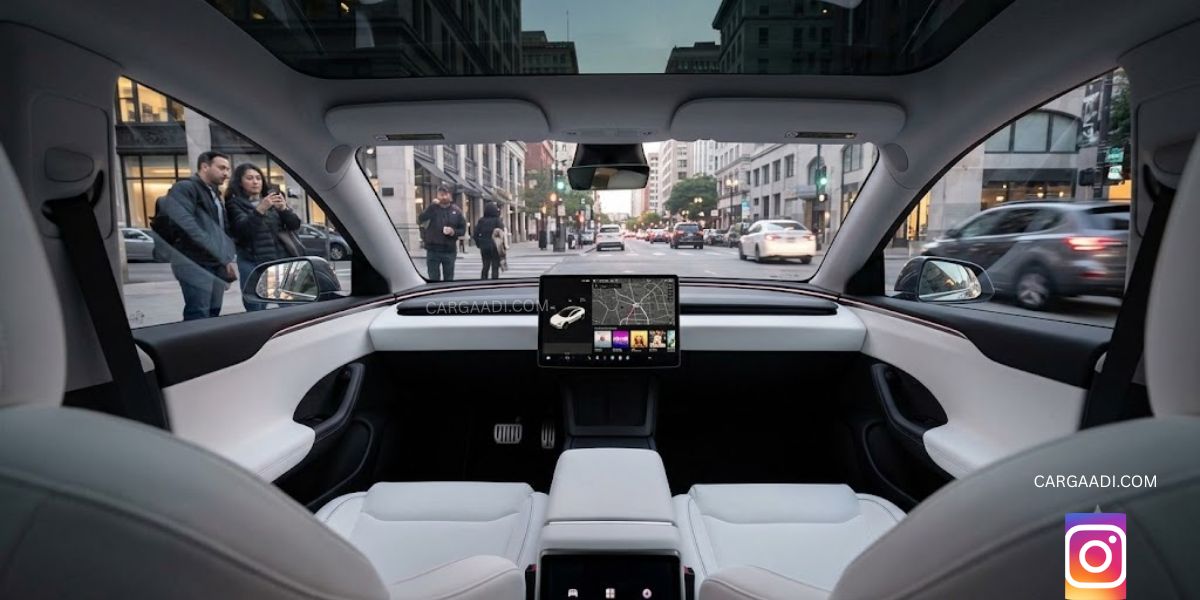
Tesla removed several traditional vehicle elements and designed the Cybercab specifically for autonomous transportation. The simplified cabin and smaller footprint contribute to lower energy demand and longer projected range.
Why the Real-World Range Could Look Different
The headline 418-mile figure represents an unadjusted EPA measurement.
That does not necessarily mean owners or fleet operators will see identical numbers in daily usage. Early estimates suggest the final real-world EPA window sticker range may settle closer to around 290–300 miles, depending on testing methodology and final certification.
Even with adjustment, that would remain a strong result for a vehicle carrying a relatively compact battery.
A Very Different Kind of Tesla
The Cybercab is unlike anything currently sold by Tesla.
Instead of being built as a traditional personal car, the vehicle has been designed around autonomous mobility. The concept revealed by Tesla removes familiar driver controls and focuses entirely on transporting passengers rather than delivering a conventional driving experience.
That philosophy explains several unusual decisions including the lightweight design, compact dimensions, and reduced power output.
Built More Like a Transportation Platform
Tesla’s broader vision appears centered around creating a vehicle that can operate efficiently for extended periods while reducing operating costs.
A lighter vehicle means:
- Lower energy consumption
- Lower charging costs
- Better range efficiency
- Reduced wear on components
- Higher utilization for ride-hailing applications
This approach may ultimately matter more than acceleration numbers.
Official Technical Specifications
| Specification | Tesla Cybercab |
|---|---|
| Vehicle Type | Autonomous Electric Robotaxi |
| Seating Capacity | 2 Passengers |
| Drivetrain | Front-Wheel Drive |
| Motor Output | 219 hp |
| Battery Capacity | 48 kWh |
| Equivalent Electric Range | 418 Miles (Unadjusted EPA) |
| Estimated Real EPA Range | Around 290–300 Miles |
| Curb Weight | 3,113 lbs |
| Efficiency | Approx. 165 Wh/mile |
| Expected Price | Around $30,000 |
Specifications remain subject to final production certification.
Pricing Could Be Tesla’s Biggest Advantage
Tesla continues to target a price point around $30,000 or less, which could make Cybercab one of the most affordable purpose-built autonomous EVs if it launches as planned.
That price is especially notable because many current autonomous transportation programs operate as services rather than vehicles available for individual ownership.
The bigger question now is not price or range—it is timing.
The Road Ahead Still Has Big Questions
While production activity has already begun at Tesla’s Texas facility, large-scale rollout and regulatory approval remain major factors that could influence launch timelines. Tesla has repeatedly emphasized that early output may increase gradually before reaching meaningful volume.
Autonomous capability will likely remain the biggest area of attention as Tesla moves closer to bringing Cybercab into broader real-world use.
Conclusion
Tesla’s newly revealed Cybercab specifications show a vehicle built with a very different mindset. Instead of chasing larger batteries and extreme performance, Tesla appears focused on efficiency, lower operating costs, and maximizing usable range.
With 219 horsepower, a compact 48 kWh battery, an estimated real-world range approaching 300 miles, and pricing targeted around $30,000, the Cybercab could become one of Tesla’s most unconventional vehicles yet.
Whether it transforms urban transportation will depend not only on hardware—but also on how quickly autonomous technology reaches real-world readiness.
Disclaimer
This article is based on publicly reported EPA-related documents, industry reporting, and Tesla’s stated plans available at the time of writing. Final specifications, pricing, production schedules, autonomous capabilities, and availability may change before official customer deliveries.